6 hr
Teide National Park: Sunset & Stargazing Experience
Watch the sun dip over three islands, sip Cava, then explore the night sky through a Dobsonian telescope.
Reserve
Hand-picked by our editors — only the best 5 experiences from 180 reviewed.
Verified partners for every tour, free cancellation where available, and instant confirmation on every booking.
6 hr
Watch the sun dip over three islands, sip Cava, then explore the night sky through a Dobsonian telescope.
Reserve
8 hr
Dine among volcanic peaks, watch the sun set over Teide, then explore the night sky through telescopes.
Reserve
9 hr
Watch the sky burn pink over Teide, then hunt constellations through a telescope after a 3-course dinner.
ReservePrices from verified partners. Availability updates in real time at checkout. Free cancellation policies apply where shown.
The landmarks, rooms, and views travelers on this tour remember — all visible on a single visit.
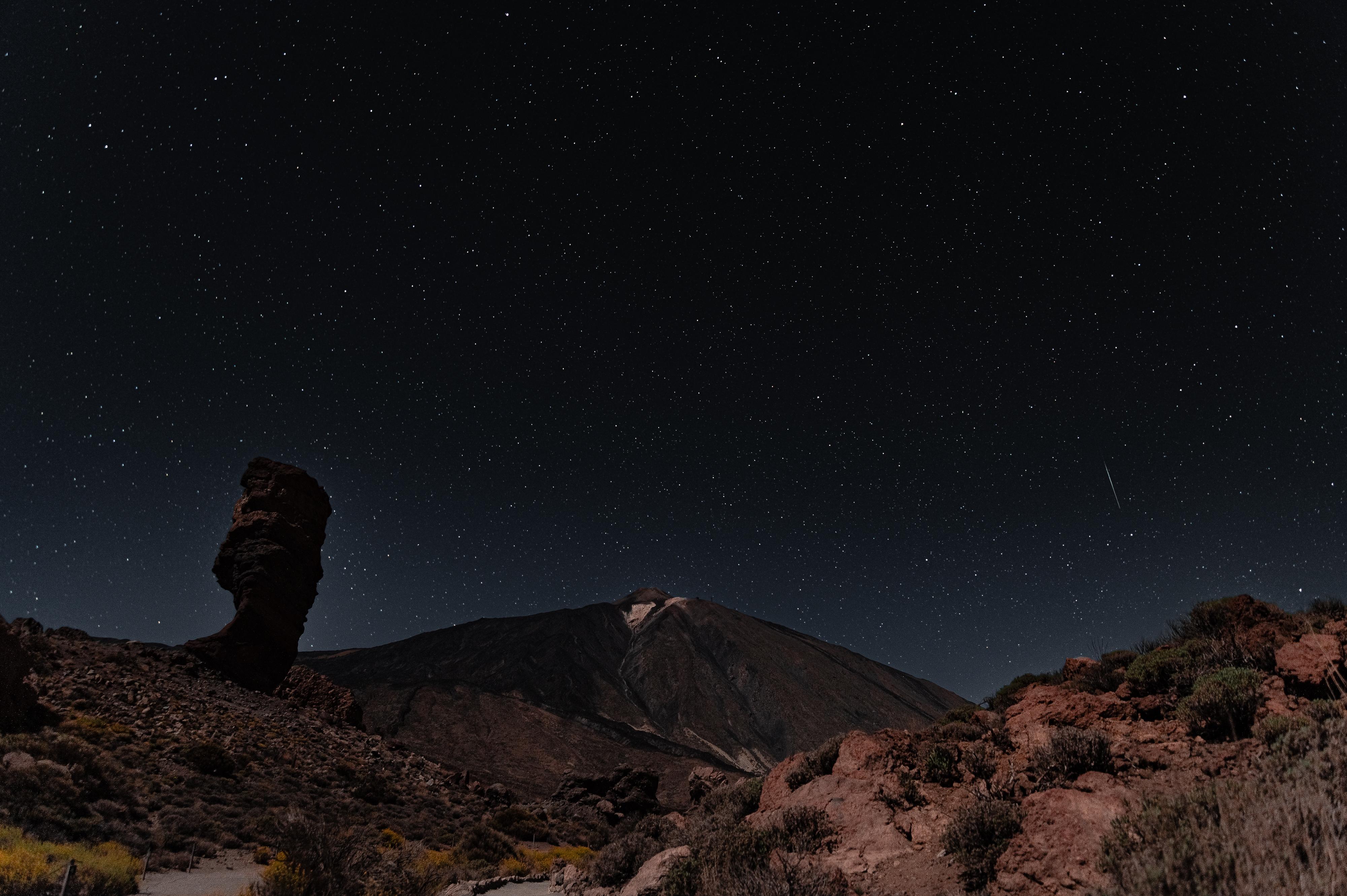
These rock formations sit in the caldera and are known for layered volcanic profiles that reveal Teide’s geological history. The formations are often used as a visual reference point for the park’s erosional landscape and sunset light. Their jagged silhouettes make them one of the most recognizable stopovers on a Tenerife Teide Stargazing Tour.
This viewpoint overlooks the same high-altitude basin and is valued for wide caldera sightlines. It is especially useful as a short stop because the open horizon helps you transition from sunset views into night-sky viewing. The area’s bare volcanic terrain makes cloud shadows easy to spot.
The Parador area is the park’s most familiar hotel landmark and a convenient reference point for evening logistics. At high elevation, the air can feel dramatically cooler after sunset, so the area’s practical value goes beyond lodging. It anchors many Teide itineraries because it is easy to identify in the dark.
Montaña Blanca is a major ascent reference on the Teide route network and a key name for hikers and guides. Its volcanic slopes are tied to the mountain’s summit-access story, with route planning often linked to this area. For many visitors, it represents the transition from roadside landscape to true summit terrain.
The cable car area is one of the most practical landmarks in the national park because it concentrates visitor movement and summit logistics. It is often associated with altitude changes, queue management, and the upper-mountain environment. Even when your goal is stargazing rather than cable-car access, it helps orient the evening route.
La Rambleta is the upper station area associated with summit-side access and strong elevation changes. It is notable for how quickly conditions shift there, with thinner air and colder temperatures than in the caldera below. That makes it a useful reference when understanding why a Tenerife Teide Stargazing Tour needs warm clothing.
They complement each other, but the Tenerife sunset-to-stars option is the better pick for casual visitors who want a dramatic night out, while the Observatory Astronomical Tour is stronger for travelers who want a deeper science angle and more guided interpretation.
| Feature | Top pick Teide Stargazing Tour | Observatory Astronomy Tour |
|---|---|---|
What you experience |
Sunset, lasers, telescopes | Solar observatory, sunset, telescopes |
Primary setting |
Teide National Park viewpoints | Teide Observatory and viewpoints |
How astronomy-led it feels |
Guided stargazing, lighter science | More scientific, observatory-led |
Time commitment |
3-6.5 hours | 8 hours |
Best for |
Casual skywatchers | Astronomy enthusiasts |
Value fit |
Shorter, simpler outing | Deeper, fuller science day |
| See tickets → |
Verdict: Choose the tenerife teide stargazing tour for a shorter, more scenic night under the stars, and pick the Observatory Astronomy Tour if you want the more immersive scientific experience and do not mind the longer day.
Choose your ticket, select your date, and reserve in under two minutes. Secure checkout handled by our verified partner.
Instant confirmation by email, with a mobile voucher you can save offline. No printing, no queuing at a collection desk.
Arrive at the entrance, show your voucher on your phone, and walk in. Most tickets include priority or skip-the-line access.
Practical details for your visit straight from our verified partners — hours, access, rules, and how to get there.
Parque Nacional del Teide, Tenerife, Canary Islands, Spain
Primary park meeting area used by many tours
Drive via TF-21 from the north or south and follow park signage to the designated viewpoint or meeting point. Parking is limited at popular stops, so arrive with time to spare for transfers and coach loading.
TITSA links to the park include lines 342, 348, and the internal 341 service within the park. Official TITSA notices show those lines operating daily, but park-stop changes can happen, so check the current timetable before travel.
A taxi is the simplest option if your tour starts near a hotel on the south coast or in Puerto de la Cruz. It is usually the most expensive transfer, but it avoids parking logistics and drop-off uncertainty.
Mount Teide nights can be cold even in summer, so layered clothing is the safest choice for a Tenerife Teide Stargazing Tour. Closed shoes are sensible on volcanic ground and uneven viewpoints.
Keep bags compact because this is an outdoor park visit with vehicle stops and short walks rather than a locker-based venue. Bring only essentials for a Tenerife Teide Stargazing Tour and leave bulky luggage at your hotel or transfer vehicle.
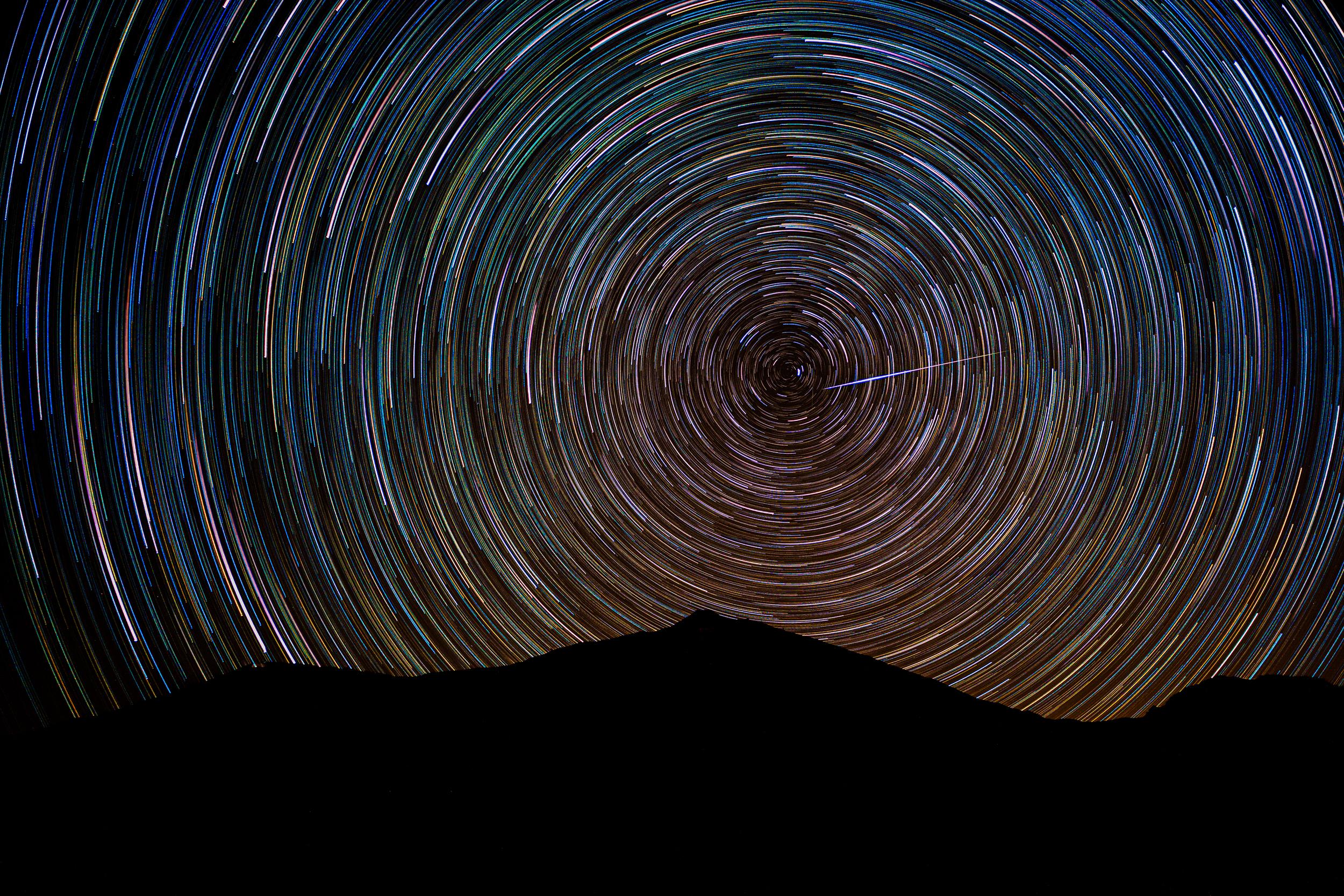
Photography is one of the main reasons people book a Tenerife Teide Stargazing Tour, especially for the Milky Way and sunset light over the caldera. A tripod helps for long-exposure sky shots, but flash is not useful for dark-sky viewing.
The park roads and some viewpoints are vehicle-accessible, but volcanic terrain, steps, and uneven surfaces can limit wheelchair movement. A Tenerife Teide Stargazing Tour is best for visitors who can board and exit a vehicle and manage short outdoor transfers.
Mobile reception can be patchy in parts of Mount Teide, so do not rely on your phone for navigation once you leave main roads. Download maps before your Tenerife Teide Stargazing Tour and charge your device fully.
Families often join a Tenerife Teide Stargazing Tour for the sunset-and-stars format, but children should be prepared for late hours and cooler air. Bring snacks and warm layers so younger visitors stay comfortable through the evening.
Food options inside the high-altitude park are limited compared with coastal towns, so many Tenerife Teide Stargazing Tour operators plan the meal stop outside the core stargazing segment. Carry water because dry air and elevation can make you thirsty quickly.
Pets are generally a poor fit for a Tenerife Teide Stargazing Tour because of late hours, cold temperatures, and rocky ground. Check the operator’s transport rules before bringing any animal on board.
The park setting is high-altitude and exposed, so even a clear evening can feel windy after sunset. The official Tenerife ON site is the reference point for permits, park updates, and access information.
Parque Nacional del Teide, Tenerife, Canary Islands, Spain
Primary park meeting area used by many tours
Get directionsBest time to go, insider tips, nearby landmarks, and the cancellation fine print — flip through to skim what matters to you.
How crowds, weather, and events shift across the year.
Spring is a strong shoulder season for clear evenings and comfortable pre-sunset temperatures, with fewer crowds than peak summer. It is a good time for a Tenerife Teide Stargazing Tour if you want stable weather without the heaviest holiday traffic.
Summer offers the warmest evenings, but the summit zone can still feel cold after dark. The 18:00–22:00 arrival window works well for sunset-led itineraries and later Milky Way viewing.
Autumn often gives crisp air and good transparency for night sky observations. This is a practical season for a Tenerife Teide Stargazing Tour because the daytime heat eases while the night sky remains clear on many dates.
Winter nights are colder and can feel windier at high altitude, but the contrast can produce very clear skies. Pack extra layers if your Tenerife Teide Stargazing Tour runs in December, January, or February.
Late summer can still be busy, so book early if your dates fall around school holidays. Clear skies are common enough to make the stargazing portion rewarding, but evening clouds can vary by day.
Small details that turn a good visit into a great one.
Temperatures drop fast once the sun goes down, so put on your warm layer before leaving the sunset stop. That avoids standing in the cold while unpacking bags in the dark.
Long-exposure photography and phone video drain batteries quickly in cool air. A fully charged power bank is useful if your Tenerife Teide Stargazing Tour runs late.
Clear evenings matter more than almost anything else for stargazing quality. If your operator provides a weather update, use it to judge whether the sky will be transparent enough for viewing.
The park sits at high elevation, so wind chill can feel stronger than the forecast suggests. Keep water handy and avoid overpacking bulky items you will not use.
Bright screens ruin dark adaptation for you and nearby guests. Switch to night mode or lower brightness before the stargazing portion starts.
Mountain roads can take longer than coast-to-park route times suggest, especially at sunset. Build in extra time so you do not miss the 18:00–22:00 arrival window that suits evening viewing best.
Non-bookable sights within a short walk — free to visit, easy to pair.
Iconic rock formations in the caldera area with layered volcanic strata and a strong sunset profile. The formations are among the most photographed features in Teide National Park.
A classic roadside overlook near the Roques area with broad caldera views. It works well as a short stop before the dark-sky segment of a Tenerife Teide Stargazing Tour.
A known high-altitude hotel area inside the park that doubles as a convenient reference point for evening tours. It is useful for logistics and transfer coordination rather than long sightseeing.
The lower access area for some summit routes and a major reference point for Teide hikers. It is often mentioned alongside the mountain’s hiking and ascent infrastructure.
The cable car station area is a key landmark for visitors planning summit access or daytime mountain logistics. It is not the stargazing itself, but it anchors many Teide itineraries.
Flexible, no hidden fees.
If you cancel within the operator’s stated refund window, the booking is refunded according to the product rules shown on the live tour grid. The 25 EUR max non-resident access fee is a separate park figure and is not the same as any tour cancellation fee.
Hand-picked options within walking distance — pick a district for vibe, or a specific hotel for convenience.
High-altitude stay inside the park area with the most convenient access for evening programs. Good for visitors who want to shorten the post-sunset drive.
Historic town district with a wide range of stays and easy road access toward the park. Useful if you want a larger choice of hotels before a Tenerife Teide Stargazing Tour.
South-coast district with many transfer-friendly hotels and resorts. A practical base for tours that depart after an early dinner.
North-coast district with good access to the park via the north road network. Often chosen by visitors who want a city base with mountain access.
Spain's highest peak stands 1,300 kilometres from Madrid, in the Atlantic. Mount Teide rises 3,715 metres above sea level and roughly 7,500 metres from the ocean floor, which places it among the largest volcanic structures on the planet. The Guanches, Tenerife's pre-Hispanic inhabitants, called the island Achinech and held that the demon Guayota had imprisoned the sun inside the crater. Tenerife Teide Stargazing Tour tours follow that summit line after dark, along roads the Guanches never had. Beneath the cone lies Las Cañadas, a caldera some 16 kilometres wide, formed by the collapse of an older edifice rather than by a single blast. Obsidian flows, pumice fields and the eroded dyke spine known as the Roques de García divide its floor. UNESCO inscribed Teide National Park on the World Heritage list in 2007, citing the geological record above the scenery. The most recent eruption inside the boundary came at Chinyero in 1909, watched by villagers from Santiago del Teide. Volcanic activity has been monitored continuously ever since, and modern Mount Teide sunset and stargazing experiences depart from the same viewpoints geologists still use. Altitude turned the mountain into an instrument. A permanent trade-wind inversion traps humidity below roughly 1,500 metres, leaving the summit above a sea of clouds for much of the year. From 1964 the Instituto de Astrofísica de Canarias developed the Teide Observatory at Izaña, and in 1988 the Spanish parliament passed the Ley del Cielo, restricting artificial lighting across the island to protect it. A Tenerife Teide Stargazing Tour tour therefore operates inside one of the most tightly regulated night skies in Europe. The park was certified a Starlight Reserve in 2013. Across a full year, 83 of the 88 recognised constellations cross this sky, Canopus among them, a star invisible from most of continental Europe. Islanders call the pursuit simply observación de estrellas en el Teide. Roads reached the caldera floor in stages through the 1960s, and the cable car opened in 1971, lifting passengers to La Rambleta at 3,555 metres. Astronomy became the island's second reading of the mountain, layered over the volcanic one. Interest in Tenerife Teide Stargazing Tour tickets now tracks the lunar calendar, thinning near the full moon and rising as the new moon returns the galactic core to full contrast. What the Guanches described as a prison for the sun is catalogued today as one of Europe's clearest windows onto the rest of the sky.
"What the Guanches described as a prison for the sun is catalogued today as one of Europe's clearest windows onto the rest of the sky."
A step-by-step walkthrough of the visit — what you'll see, how long each stage takes, and the details that matter.
Your minibus leaves the coast in daylight and climbs through four vegetation belts in a single ascent: banana terraces, then laurel, then pine forest, then nothing but lava. Ears pop somewhere past 1,500 metres. You step out onto the Llano de Ucanca or the pull-off below the Roques de García inside the 18:00–22:00 window, and the temperature has dropped fifteen degrees since the hotel. You watch the shadow of the cone stretch east across the caldera floor, a grey triangle forty kilometres long thrown onto the Atlantic haze. Then you turn around. Your guide hands out fleece jackets and something hot to drink, and the first stars arrive before your eyes have adjusted. On a Tenerife Teide Stargazing Tour you queue at an eyepiece rather than a turnstile. A green laser draws Sagittarius overhead. You look at Saturn's rings, at the Ring Nebula in Lyra, at craters along the lunar terminator if the moon is up. Someone photographs you standing beneath the galactic core, arms out, the exposure long enough that you must hold still for fifteen seconds. You descend through the cloud layer afterwards, and the sky closes behind you.
The park hours listed for this attraction are Mon–Sun, 00:00–23:59. For a Tenerife Teide Stargazing Tour, the practical arrival window is 18:00–22:00, which matches sunset and night-sky timing.
The best arrival window is 18:00–22:00, and that is the official recommendation to catch sunset and the night sky. For a Tenerife Teide Stargazing Tour, arriving inside that window avoids rushing the transition from daylight to stargazing.
Accessibility is limited by volcanic terrain, steps, and uneven surfaces, even though many viewpoints are reachable by vehicle. A Tenerife Teide Stargazing Tour is easiest if you can board a coach or car and handle short outdoor transfers.
Small bags are best because this is an outdoor park visit with moving stops rather than a locker venue. Security is mainly about safe packing and respecting park rules, so leave bulky luggage behind and keep valuables close during the Tenerife Teide Stargazing Tour.
Yes, photography is a major part of the experience, especially at sunset and during dark-sky viewing. Tripods help with long exposure, but flash is not useful for a Tenerife Teide Stargazing Tour and can disturb the viewing environment.
Dress in layers because the mountain cools sharply after sunset, even in summer. Closed shoes and a warm jacket are the practical baseline for a Tenerife Teide Stargazing Tour.
Carry water and a light snack if your tour operator allows it, because food options in the high park are limited. Many Tenerife Teide Stargazing Tour itineraries handle dinner separately from the core sky-viewing time.
Use the main park roads and follow the operator’s meeting instructions; TITSA bus services include lines 342, 348, and the internal 341 park service. If you are self-driving, TF-21 is the key route for a Tenerife Teide Stargazing Tour.
Yes, many families join the evening format, but late hours and cooler air can be tiring for younger children. Pack warm layers and snacks so the Tenerife Teide Stargazing Tour stays comfortable through the night.
The page’s live product grid is the source of truth for booking-specific cancellation terms. Park access itself uses the 25 EUR max non-resident access fee, but that is separate from any tour refund rule shown for Tenerife Teide Stargazing Tour tickets.
Roques de García and Mirador de La Ruleta are close, photogenic add-ons in the caldera area. If you have extra daylight before your Tenerife Teide Stargazing Tour, those viewpoints fit naturally into the same mountain outing.