6 hr 30 min
Teide National Park Sunset & Stargazing Tour
Watch the sun set above the clouds, then explore the night sky over Teide with expert guides.
Reserve
Hand-picked by our editors — only the best 5 experiences from 140 reviewed.
Verified partners for every tour, free cancellation where available, and instant confirmation on every booking.
6 hr 30 min
Watch the sun set above the clouds, then explore the night sky over Teide with expert guides.
Reserve
8 hr
Dine on volcanic slopes, watch the sun set behind Mount Teide, then scan the sky with telescopes.
Reserve
9 hr
Watch the sun set above the clouds on Teide, then explore the night sky with a telescope and a 3-course dinner.
ReservePrices from verified partners. Availability updates in real time at checkout. Free cancellation policies apply where shown.
The landmarks, rooms, and views travelers on this tour remember — all visible on a single visit.
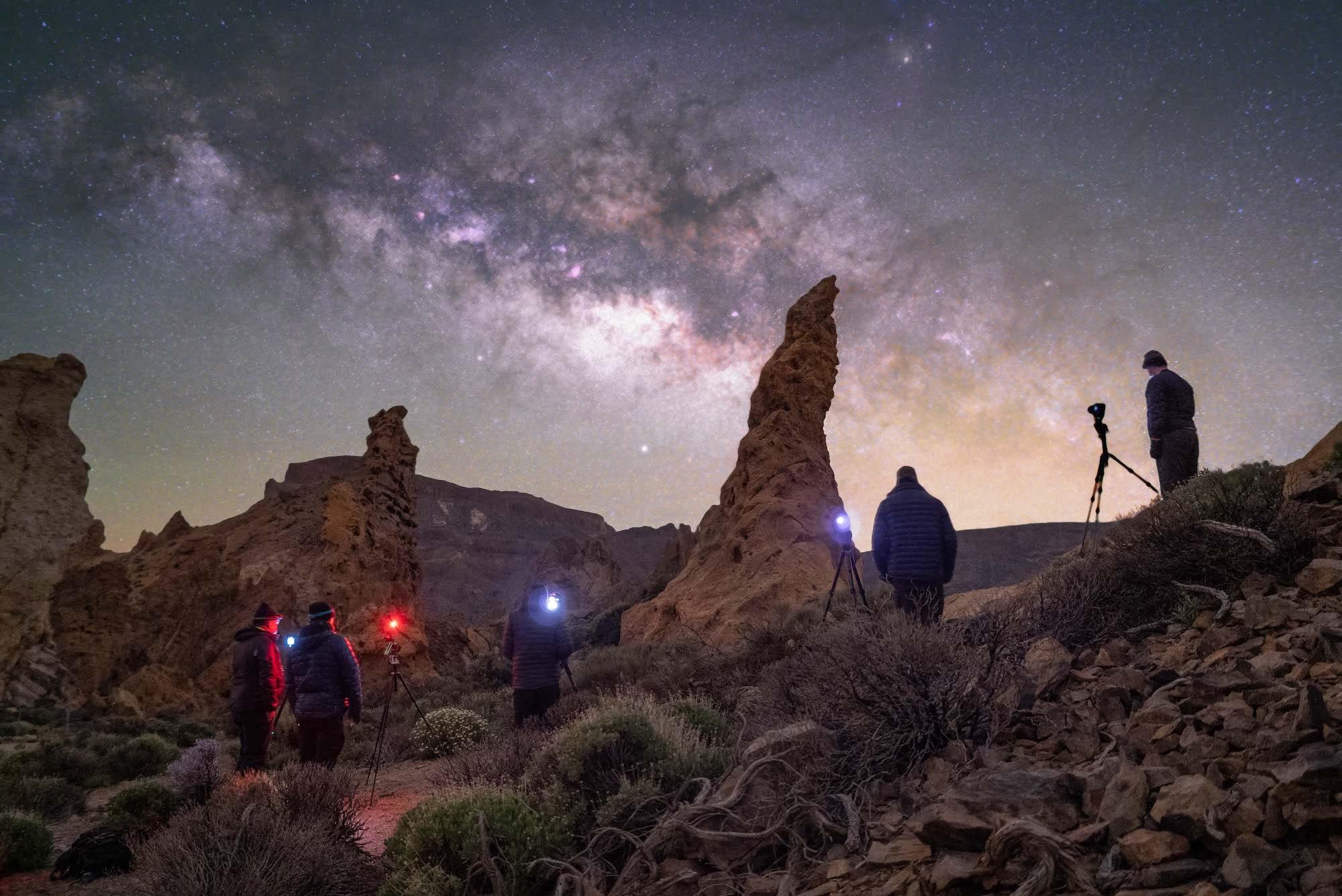
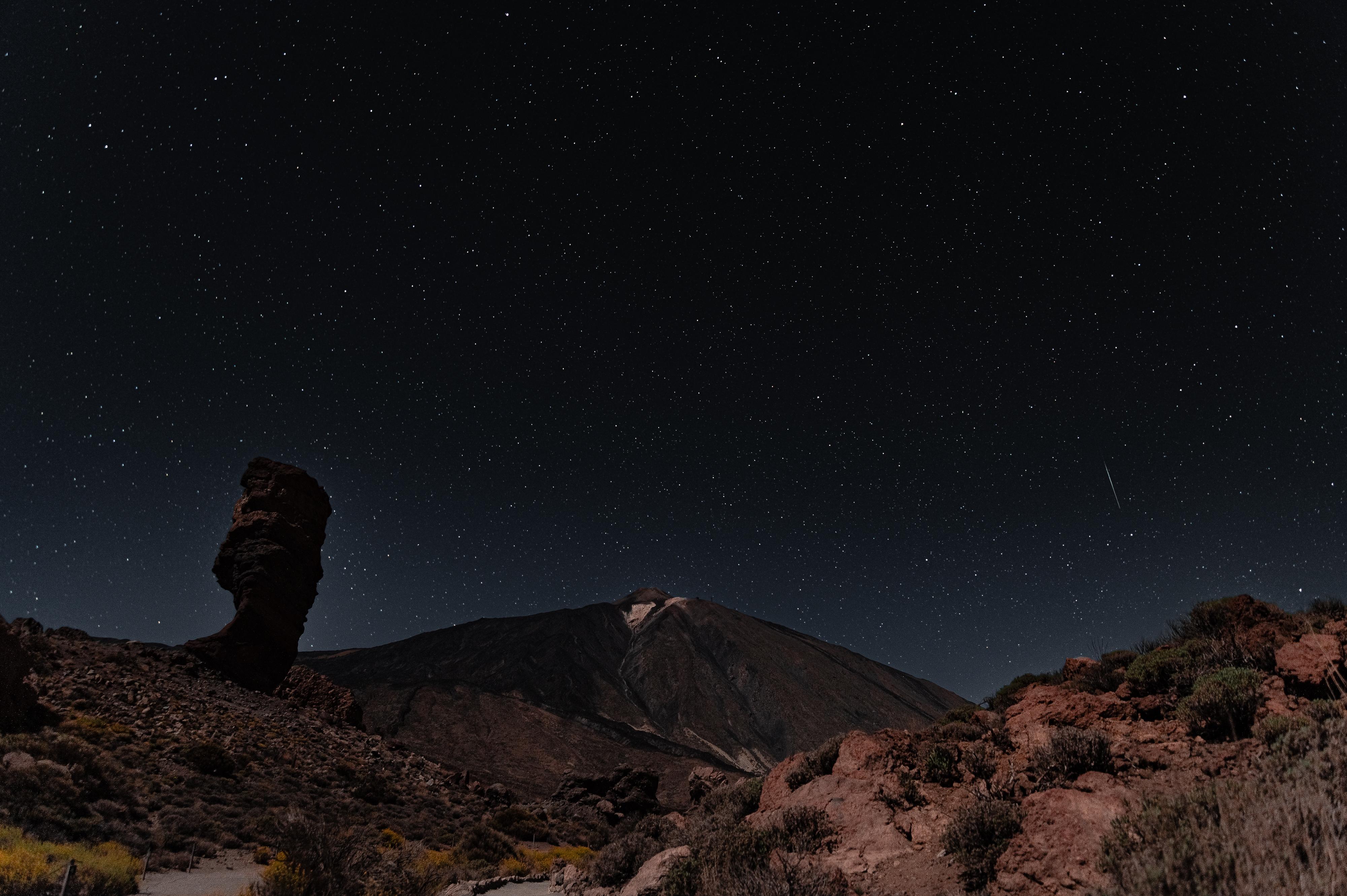
These lava formations are one of Teide National Park’s signature sculpted backdrops, created by long volcanic erosion rather than a single eruption. Their stacked shapes make them a strong foreground for sunset and first-light astrophotography, with the Teide massif rising behind them.
They complement each other, but the sunset-and-stargazing tour is the better pick for astronomy and evening atmosphere, while the cable car day trip suits travelers who want summit-area views in daylight. If you are deciding between teide national park sunset & stargazing tour tours and a daytime mountain outing, choose the night format for the sky and the cable car format for panoramic volcanic scenery.
| Feature | Top pick Sunset & Stargazing Tour | Cable Car Day Trip |
|---|---|---|
Primary goal |
Sunset plus star viewing | Summit-area views in daylight |
Time of day |
Evening into night | Daytime |
What you see most clearly |
Sunset colors, constellations | Volcanic landscape, caldera views |
Access style |
Coach transfer, guided stop | Coach transfer, cable car |
Crowds |
Generally lighter after sunset | Busier daytime peak |
Best for |
Astrophotography and sky watchers | First-time daytime panoramas |
| See tickets → |
Verdict: For a night-sky-focused visit, teide national park sunset & stargazing tour is the stronger choice; for brighter summit views and a classic daytime ascent, the cable car day trip is the better fit.
Choose your ticket, select your date, and reserve in under two minutes. Secure checkout handled by our verified partner.
Instant confirmation by email, with a mobile voucher you can save offline. No printing, no queuing at a collection desk.
Arrive at the entrance, show your voucher on your phone, and walk in. Most tickets include priority or skip-the-line access.
Practical details for your visit straight from our verified partners — hours, access, rules, and how to get there.
The Teide plateau is high-altitude and can feel cold after sunset, even in summer, so bring a warm layer for the stargazing part. For this teide national park sunset & stargazing tour, long trousers are recommended by tour operators and shorts are not allowed on some astronomy outings.
Carry only a small bag with essentials, because the route is organized around coach transfers, viewpoints, dinner, and telescope time rather than free roaming. Night access around observatory areas is controlled, and only authorized people may enter agreed installations.
A teide national park sunset & stargazing tour is best for wide landscape shots, silhouettes, and astrophotography when the sky is clear. Outside lighting for recording after sunset is forbidden in observatory areas, and drones require special authorization that is not guaranteed.
This teide national park sunset & stargazing tour is generally better for travelers who can board a coach, walk short distances at viewpoints, and handle altitude. Some operators note no walking at the astronomy stop and on-site parking at the mirador, but high elevation can be difficult for visitors with heart or breathing issues.
Families should check age limits before booking a teide national park sunset & stargazing tour, because some Sunset & Stars departures do not accept children under 8. Younger children may be better served by daytime park visits instead of a late evening schedule.
Food is part of many teide national park sunset & stargazing tour options, often as a picnic-style or buffet dinner. The national park also says there are no picnic areas inside the park, so bringing your own snack and water is wise if your specific booking does not include a meal.
The teide national park sunset & stargazing tour usually combines a late-afternoon ascent, sunset viewpoint stop, dinner, and telescope observation. Weather can shift the sunset location from the cable car top station to park viewpoints such as Chío Viewpoint or Los Roques de García, so flexibility matters.
Best time to go, insider tips, nearby landmarks, and the cancellation fine print — flip through to skim what matters to you.
Flexible, no hidden fees.
If weather or operational conditions stop the cable car from running on the Sunset & Stars activity, the sunset is moved to a viewpoint and the cable-car-at-sunset portion is reimbursed. If a service interruption due to weather or technical reasons causes a delay of at least 90 minutes, a full refund may be requested if the tickets have not been used.
The summit of Mount Teide is 3,715 metres high, yet the volcano continues for another 3,000 metres beneath the Atlantic. Measured from its base on the ocean floor, it ranks among the tallest structures on Earth. Spain's highest point is, in geological terms, mostly invisible. The surrounding Parque Nacional del Teide was declared a national park in 1954 and inscribed on the UNESCO World Heritage list in 2007. Its centre is Las Cañadas, a caldera roughly 16 kilometres across, ringed by escarpments that fall away in sheer walls of ochre and rust. Within it lie obsidian flows, pumice fields and the wind-carved lava spires known as Los Roques de García. The rock here reads as a record of eruption: the last, at Chinyero on the park's western flank, occurred in 1909. Guanche islanders called the mountain Echeyde and understood it as the dwelling of Guayota, a demon who had imprisoned the sun. What draws visitors after dark is a second, atmospheric inheritance. The Canary Islands sit beneath a stable inversion layer that traps cloud below roughly 1,500 metres, leaving the caldera under clear, dry air for much of the year. Spain's 1988 Sky Law restricts light pollution across Tenerife, and the archipelago holds Starlight Reserve status. The Observatorio del Teide, opened at Izaña in 1964, operates solar telescopes here for institutions across Europe. On a moonless night the Milky Way is visible to the naked eye, along with Saturn's brightest moons through a modest instrument. A teide national park sunset & stargazing tour exists because these two conditions — a volcanic amphitheatre and one of the northern hemisphere's cleanest skies — occupy the same coordinates. The park itself charges no admission: entrance is free, 0 EUR, and the gates stand open around the clock, monday through sunday, 00:00–23:59. That openness is precisely why guided teide national park sunset & stargazing tour tours have become the standard way to see it after dusk. Elevation, cold and distance make the caldera a demanding place at night, and the operators running each teide national park sunset & stargazing tour tour supply the transport, the telescopes and the astronomical commentary that turn a dark road into a legible sky. Above Las Cañadas, the constellations are not decoration. They are the reason the observatories came.

"Guanche islanders called the mountain Echeyde and understood it as the dwelling of Guayota, a demon who had imprisoned the sun."
A step-by-step walkthrough of the visit — what you'll see, how long each stage takes, and the details that matter.
You board in the resort belt of the south coast in the late afternoon and climb through pine forest, the road switching back until the cloud sea drops below the window. Your driver crosses into the caldera and pulls in near Los Roques de García. You step out into thin, dry air roughly 2,200 metres above the Atlantic. Aim to be in position between 18:00 and 20:00, the window that catches full sunset colour and the first stars together. You watch the volcano's shadow stretch eastward across the cloud layer, a perfect grey triangle that can reach the neighbouring island of Gran Canaria. Then the temperature falls, quickly. On a teide national park sunset & stargazing tour with dinner, you eat before full dark — the dinner and night-tour options on this page bundle a meal into the same evening. After twilight, your guide sets up telescopes on a pull-off away from headlights. You queue briefly at the eyepiece for Saturn's rings, the Orion Nebula, or a lunar terminator sharp enough to show crater walls. A laser pointer traces constellations overhead while the guide names them. You descend afterwards through the same switchbacks, back beneath the inversion layer, with the sky closing behind you.
The park is open 24 hours every day, so the ticketed evening product is scheduled around sunset and night sky conditions rather than a closing time. The canonical arrival window remains 18:00–20:00 for the best light.
Ticketed access is usually based on coach transfers and short viewpoint stops, with some astronomy stops requiring no walking. Because the site is at high altitude, visitors with breathing or heart issues should be cautious.
Keep bags minimal and avoid restricted items like drones, fires, spotlights, and external lighting. Security-controlled observatory settings can deny access to unauthorized people or vehicles.
Photography is part of the experience, especially around sunset and the Milky Way. External lights after sunset are restricted in observatory areas, so use low-impact settings and no flash if you can avoid it.
The best ticket dates are clear summer or shoulder-season nights, when temperatures are milder and the sky is often steady. The park’s dark-sky reputation is a major reason people choose a teide national park sunset & stargazing tour tickets product.
Dress for a mountain evening, not a beach evening. Layers, long trousers, and closed shoes are the most practical combination for a teide national park sunset & stargazing tour tickets outing.
Many products include a picnic or dinner component, and the park itself says there are no picnic areas inside. If your booking does not include food, carry water and a light snack.
Most ticketed departures use hotel-area pickup or a pre-set meeting point, not independent arrival at the telescope stop. Read the voucher closely for the exact transfer zone and coach time.
Family suitability depends on the specific product, and some Sunset & Stars options set the minimum age at 8. If you are traveling with younger children, choose a different park product rather than assuming all evening tickets work for them.
If weather or operations prevent cable-car use, the sunset is moved to a viewpoint and the cable-car-at-sunset amount is refunded. A delay of at least 90 minutes due to weather or technical reasons can qualify for a full refund if unused.
Pair the tickets with Los Roques de García, Chío Viewpoint, or the park’s restaurant stops at Portillo Alto and the Parador. Those places fit naturally into the same evening without adding long transfers.