
English| EUR
Suggested for you
More currencies
Choose a language
Rain on the beach at Puerto de la Cruz and a clear sky over the caldera are not a contradiction on Tenerife; they are the island's normal arrangement. Read what follows as a can you see stars when it rains guide for the high mountain, not a forecast for the coast. It explains why the cloud deck usually sits below the observing sites, and when that rule breaks.
Quick answer
No. If rain is falling on you, cloud sits overhead and the stars are hidden. The useful detail at Mount Teide is altitude: rain on the coast often falls from a low cloud deck, while the caldera at roughly 2,100 m sits above it. The park itself stays open 00:00–23:59 daily, with no gate fee.
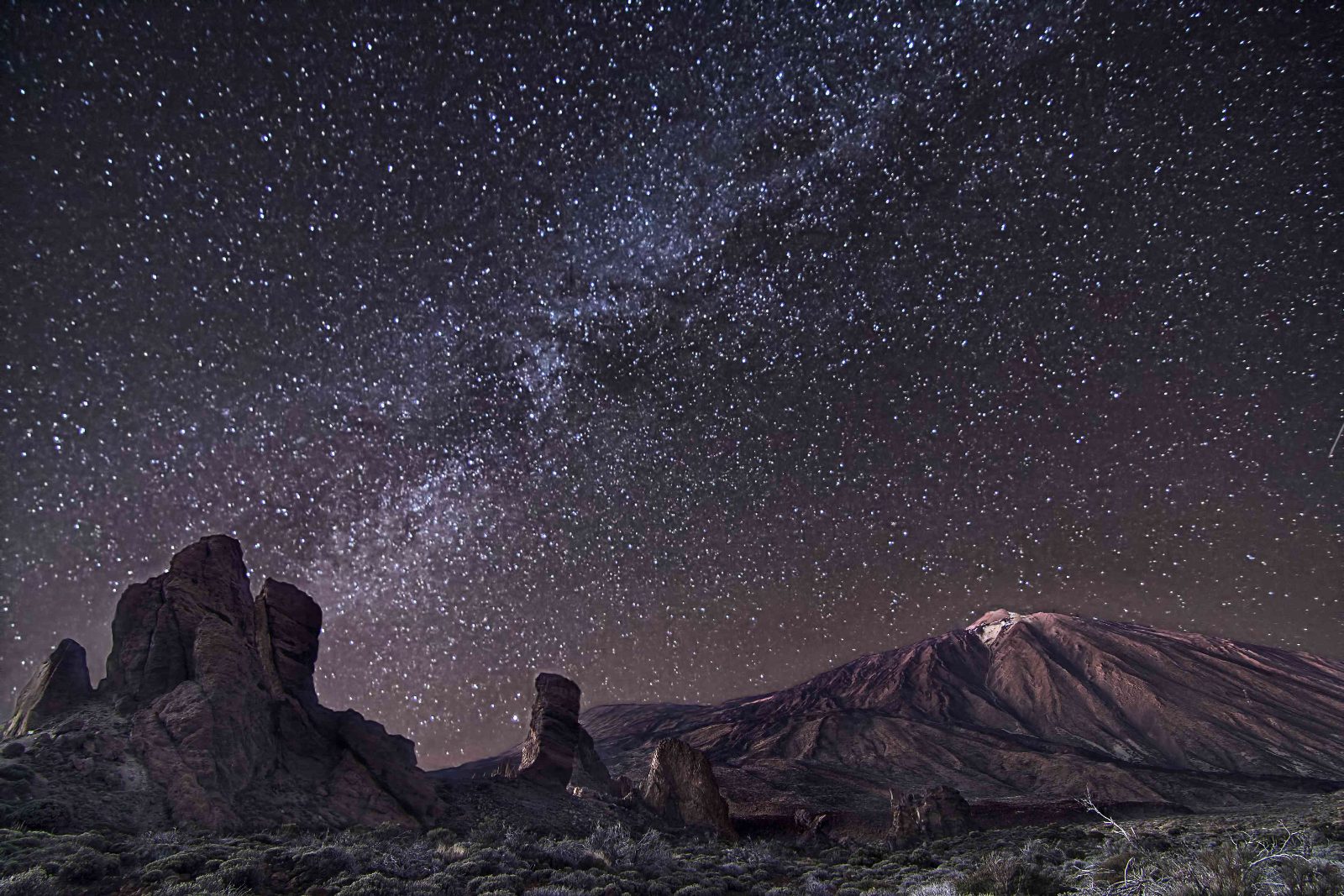
Spain passed a law to protect this sky. The 1988 Ley del Cielo restricts outdoor lighting, air traffic and radio interference around the Teide Observatory at Izaña, 2,390 metres above the Atlantic. Tenerife was certified a Starlight Reserve, and the national park carries UNESCO World Heritage status. Spanish-speaking visitors phrase the same doubt as ¿se pueden ver las estrellas cuando llueve? All of that protection sits under one variable no statute can regulate: cloud. So when visitors ask can you see stars when it rains, the honest answer begins with water, not with light pollution. Rain requires cloud, and cloud is opaque. No telescope, filter or altitude gain sees through a saturated deck directly overhead. What makes Mount Teide unusual is where that deck usually sits. The trade winds push a moist layer against the island's northern slopes, and it typically caps out between 800 and 1,500 metres. Above it lies the inversion layer: dry, still air that gives the summit region its reputation. Puerto de la Cruz can be soaked while the Las Cañadas caldera stays dry under the Milky Way. The mar de nubes, the sea of clouds, is that same rain seen from above. The Izaña station records some of the clearest observing nights in Europe for precisely this reason. The exception matters. Winter storms, Atlantic lows and occasional calima events lift moisture and dust well past 2,500 metres, and then the summit sits inside the weather rather than above it. Snow closes roads. Wind cancels telescope sessions. A coastal forecast is therefore close to useless for planning a night at altitude; readers should check high-mountain forecasts and satellite imagery for the caldera itself, not for their hotel. Operators of a Teide stargazing tour make the same call each afternoon, which is why guided sessions and cable car night visits are confirmed late. Anyone still weighing whether can you see stars when it rains applies to their own plans should treat rain at sea level as a question, not a verdict. The park's own night-sky listings at volcanoteide.com and the guided options elsewhere on this site are the practical next step.
“It rains below the inversion layer and clears above it: the same system that soaks Puerto de la Cruz becomes the sea of clouds seen from Las Cañadas.”
Mount Teide is open every day of the week, all year round. The park’s official schedule is Monday to Sunday, 00:00–23:59, so there is no weekly closure day.
Teide National Park sits at Teide National Park, Tenerife, Canary Islands, Spain. For stargazing, the simplest approach is by car into the park itself, because the arrival problem is reaching the mountain roads safely and getting in before night conditions settle.
Drive via TF-21, TF-24, or TF-38 into Teide National Park and follow the signed park roads toward the stargazing area
Use island buses to reach the Tenerife mountain access points, then continue by prearranged transfer or taxi into the park
Book a taxi from your Tenerife base directly to Teide National Park, Tenerife, Canary Islands, Spain
Not practical as a primary approach for reaching the park from the coast or towns
Plan to arrive in the 18:00–22:00 window so you are already in the park before darkness deepens. Parking is the reality on a mountain visit, so build in extra time for slow roads and check conditions if weather may affect road safety or sky visibility.
Rain at Mount Teide almost always means cloud, and cloud means no stars — yet most disappointing nights come down to a handful of avoidable planning errors. These are the ones that cost visitors a clear sky.
Assuming light rain still allows some stargazing
Rain requires thick cloud cover, which blocks the sky entirely — there is no partial view through it. Postpone to a dry night rather than driving up hoping the sky breaks.
Checking only the coastal forecast before driving up
Weather at 2,000+ metres differs sharply from Puerto de la Cruz or Los Cristianos. Check a mountain-specific or summit-level forecast, and look at cloud cover percentage, not just the rain icon.
Ignoring cloud cover when no rain is forecast
A dry night can still be fully overcast. Confirm cloud cover is low before committing, since overcast skies produce the same blank result as rain.
Arriving before the sky is properly dark
Twilight lingers well after sunset, so early arrivals see little. Use the 18:00–22:00 window, which is best for sunset and stargazing, and allow time for full darkness.
Treating every night at the park as identical
Visibility changes nightly with cloud, humidity and moon phase. Check conditions the same day rather than assuming a previous visitor's experience will repeat.
Booking no fallback night into a short trip
Weather can close the sky for several nights running. Plan a second possible date, and confirm current conditions and activity details at https://www.volcanoteide.com/en/activities/stars.
Rain in the resorts often means cloud below the summit rather than above it, so a few checks the week before and on the day decide whether the drive up is worth making.
Everything you need to know about can you see stars when it rains
No. If it is raining, cloud cover usually blocks the night sky, so can you see stars when it rains is generally unlikely to deliver clear stargazing at Mount Teide. The park is known for dark skies, telescopes, and Starlight guides, but visibility still depends on weather and cloud layers.
The main reason can you see stars when it rains falls short is simple: rain usually comes with moisture and cloud, and both hide constellations and planets. Teide’s high elevation helps on clear nights, yet weather can still change quickly on the volcano.
Yes, if your goal is the sunset-and-stars experience, but only when the sky clears. The Teide route is built around sunset views, telescope viewing, and the park’s astronomy setting, so a rainy evening can reduce the star segment even if the visit still goes ahead.
The best arrival window is 18:00–22:00, which matches sunset and stargazing timing at Teide. That window is the one to plan around if you are checking can you see stars when it rains, because clouds and rain can affect what you see after dark.
The published duration for the Sunset & Stars experience is 7 h, while other Teide stargazing options vary. If you are comparing can you see stars when it rains with other visits, keep in mind that the nighttime sky portion depends on conditions, not just the schedule.
Yes, the Teide star experiences include child pricing on the official listings, and the park setting is family-friendly for older children who can stay up late. For can you see stars when it rains, the practical issue is comfort and visibility rather than access, so rain may make the evening less suitable for very young kids.
The entrance fee for Teide National Park is 0 EUR, with no gate fee for the park. So can you see stars when it rains is not about paying a park entry charge, but about whether the weather lets you see the sky.
The biggest mistake is assuming rain only affects comfort. For can you see stars when it rains, the real issue is visibility, so visitors should not expect a full stargazing session if clouds are low or the sky stays overcast.
Tenerife Teide Stargazing Tours
Read more Tickets & toursTeide Astronomy Tours
Read more GuideHow to Stargaze in Tenerife on Your Own
Read more GuideBest Teide Stargazing Tours
Read more GuideHow Long Does It Take to Walk Up Teide?
Read more Tickets & toursSunset & Stargazing Tours
Read more Tickets & toursPrivate Stargazing Tours
Read more