6 hr 30 min
Mount Teide Sunset & Guided Stargazing Tour
Watch a spectacular sunset above the clouds and explore the night sky with telescopes in Teide National Park.
Reserve
Hand-picked by our editors — only the best 5 Teide Stargazing Private Tour tours from 62 reviewed.
Verified partners for every tour, free cancellation where available, and instant confirmation on every booking.
6 hr 30 min
Watch a spectacular sunset above the clouds and explore the night sky with telescopes in Teide National Park.
Reserve
8 hr
Witness a brilliant sunset over Mount Teide, enjoy a local Canarian meal, and stargaze through powerful telescopes.
Reserve
9 hr
Ascend above the clouds for a magical Tenerife sunset, a traditional 3-course dinner, and a guided stargazing session.
ReservePrices from verified partners. Availability updates in real time at checkout. Free cancellation policies apply where shown.
The landmarks, rooms, and views travelers on this tour remember — all visible on a single visit.
At 3,550 m, La Rambleta is the key high-altitude platform used to reach Mount Teide’s upper routes. It sits just below the summit zone, making it a useful reference point for observing how volcanic terrain changes with elevation.
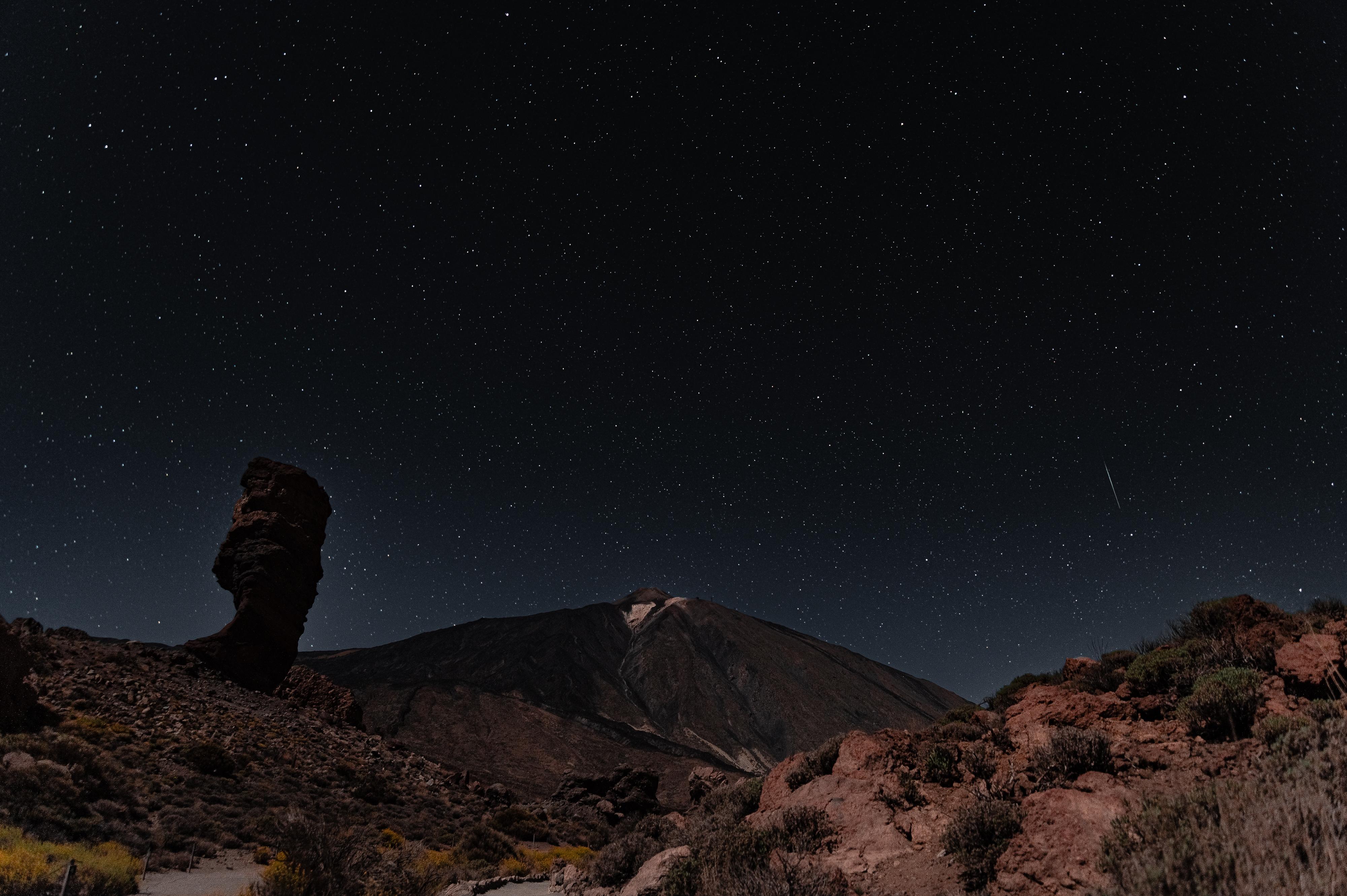
These sculpted volcanic outcrops are among the park’s most recognizable rock formations, shaped by erosion over long geological time. Their layered profiles are especially striking when side-lit at sunset before a night-sky session.
The summit rises to 3,715 m and is the highest point in Spain. Access is tightly controlled, and the crater area is treated as a reserve zone, which adds to the sense of protected, scientific landscape.
Pico Viejo is a major volcanic feature inside the Teide system and gives the park its layered caldera profile. From some viewpoints it reads as a second peak, contrasting sharply with Teide’s cone.
Montaña Blanca is one of the principal approaches into the Teide highlands and is closely linked to official trail and bivouac access. Its pale slopes stand out against the darker lava fields that frame night excursions.
Llano de Ucanca is a broad high-altitude plain that emphasizes the scale of the Teide caldera. In clear conditions it gives photographers a wide, open foreground for constellation work and long-exposure compositions.
They complement each other, but teide stargazing private tour is the better pick if you want exclusivity, faster pacing, and a quieter telescope session. The small-group Tenerife: Teide National Park Sunset Picnic and Stargazing works better if you want a cheaper package with dinner and pickup bundled in.
| Feature | Top pick Private tour | Sunset Picnic and Stargazing |
|---|---|---|
Privacy |
Only your group | Up to 55 travelers |
Flexibility |
1 hour 20 minutes; guide-led | 6 hours 30 minutes; fixed itinerary |
Group size |
Private; your group only | Large coach group |
Pickup pace |
Meet at Minas de San Jose | Pickup from South Tenerife points |
Dinner/picnic included |
Dinner included | 3-course dinner included |
Photo time |
Direct telescope time | Professional photos included |
Typical duration |
1 hour 20 minutes | 6 hours 30 minutes |
Value for money |
Premium, group-only experience | Lower per-person price |
| See tickets → |
Verdict: Choose the private tour for a more intimate, faster, high-comfort stargazing session; choose the rival if bundled dinner, pickup, and a lower ticket price matter more than privacy.
Choose your ticket, select your date, and reserve in under two minutes. Secure checkout handled by our verified partner.
Instant confirmation by email, with a mobile voucher you can save offline. No printing, no queuing at a collection desk.
Arrive at the entrance, show your voucher on your phone, and walk in. Most tickets include priority or skip-the-line access.
Practical details for your visit straight from our verified partners — hours, access, rules, and how to get there.
A teide stargazing private tour usually means a sharp drop in temperature after sunset, so thermal layers, a windproof jacket, long trousers, and closed shoes are the safe choice. High-altitude nights on Mount Teide can feel much colder than coastal Tenerife, even in summer.
Carry only a compact day bag so you can keep hands free for uneven ground, tripods, and warm clothing. Teide National Park has tightened controls around vehicle access, parking, and fire risk, so bring only essentials and keep valuables with you at all times.
Night photography is a core part of a teide stargazing private tour, so a tripod, remote shutter, and a flashlight with red mode are useful. Drone flying is not allowed in the protected area, and smoking is banned throughout the park, including open areas and viewpoints.
The main stargazing areas in Teide National Park are reached by mountain roads and outdoor terrain, not step-free urban pavements, so mobility support is limited. If you have respiratory, cardiac, or mobility concerns, choose a short, vehicle-based private experience rather than a hike-focused itinerary.
A teide stargazing private tour can work well for older children who can stay warm and patient during the night sky session. The setting is remote and dark, so families should plan for late hours, bathroom stops before departure, and careful supervision near road edges and lava terrain.
Bring water and a light snack unless your private operator includes refreshments, because the high-altitude park has limited late-night services. Alcohol, open flames, and camp-style cooking are poor fits for this environment, especially under current fire-prevention rules.
A private observatory-style evening in Mount Teide is best treated as a mountain outing first and an astronomy session second, because weather and road conditions can change quickly. Keep an eye on any live park notices on the day of travel, especially if you plan to pair the experience with a stop at La Rambleta or another high-altitude viewpoint.
Best time to go, insider tips, nearby landmarks, and the cancellation fine print — flip through to skim what matters to you.
Flexible, no hidden fees.
If your booking is canceled within the operator’s stated free-cancellation window, you receive a full refund; otherwise, the fee is forfeited according to the product terms. Any peak-area access charge for non-residents follows the 25 EUR conservation fee quoted for Teide National Park.
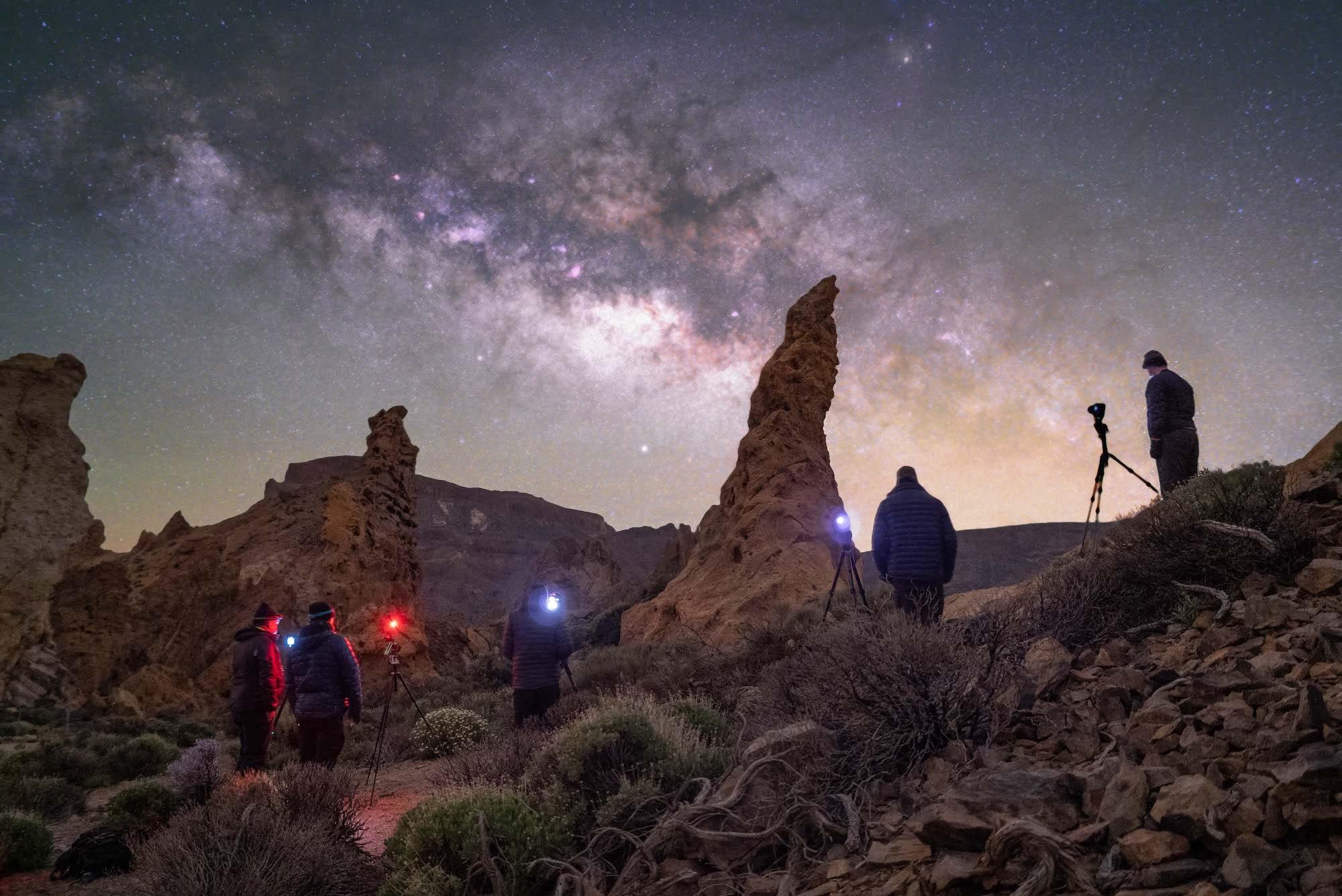
The Guanches called the mountain Echeyde and believed a demon lived chained inside it. Spain's highest peak rises 3,715 metres straight out of the Atlantic, and the caldera at its foot — Las Cañadas, some 16 kilometres wide — is the floor a Teide Stargazing Private Tour crosses after dark. Tenerife's last eruption came in 1909, at Chinyero, on the volcano's western flank. Much of the rock underfoot is younger than the cathedrals of mainland Spain. Altitude explains only half the sky. A trade-wind inversion traps cloud between roughly 1,000 and 1,500 metres, leaving the summit region above the weather on most nights of the year. Astronomers noticed early. The Teide Observatory at Izaña, founded in 1964 at 2,390 metres, was among the first sites in Europe chosen for atmospheric stability rather than convenience, and its solar telescopes remain in daily use. Spain's Sky Law of 1988 then restricted light pollution across the archipelago, and in 2007 the island's night sky was certified as a Starlight Reserve. Those protections are the reason Teide Stargazing Private Tour tours gather on the high plateau instead of the coast. The park itself was designated in 1954 and inscribed as UNESCO World Heritage in 2007. What a Teide Stargazing Private Tour tour crosses is a landscape of phonolite spires and obsidian flows: the Roques de García, where the wind-cut arch of Roque Cinchado once appeared on the thousand-peseta note; the pale pumice plain of Llano de Ucanca; the teleférico cables strung toward 3,555 metres. Around 200 plant species grow here, dozens of them endemic, including a violet that survives near 3,500 metres. The Parador, opened in 1960, sits alone at the caldera's centre — for decades the only lit building for kilometres in any direction. By day the mountain is a geology lesson. After sunset it becomes an instrument. Cloud fills the valleys below, the horizon glow of Santa Cruz drops away, and the galactic core stands over Pico Viejo with the naked eye doing most of the work; some 83 of the 88 recognised constellations pass overhead from these latitudes across the year. Local guides still describe the night in Spanish as a tour privado de estrellas en el Teide, and Mount Teide stargazing excursions now sit alongside the summit itself among Tenerife's defining landmarks. A Teide Stargazing Private Tour is, in the end, the oldest form of observation practised at one of Europe's youngest addresses.
"By day the mountain is a geology lesson; after sunset it becomes an instrument."
A step-by-step walkthrough of the visit — what you'll see, how long each stage takes, and the details that matter.
You leave the coast in daylight and gain 2,000 metres in under an hour, laurel and pine giving way to lava the colour of rust. Your driver stops at a lay-by near Boca Tauce so you can watch the shadow of the volcano stretch east across the cloud sea — a clean triangle thrown some 60 kilometres over the Atlantic. It holds for about fifteen minutes. Then the temperature drops, hard, and you reach for the jacket you were told to pack. Full dark is the second act. The minivan pulls onto a gravel apron, the headlights die, and you stand still for ten minutes while your eyes adjust and the sky doubles, then triples, in depth. Your guide sets up the telescope, finds Saturn, steps back and says nothing. You look. Later a green laser traces Cassiopeia, Vega, and the faint smear of Andromeda, 2.5 million light years out. The recommended arrival window runs 20:00–23:30, and you feel every hour of it. Your Teide Stargazing Private Tour tickets cover the guiding and the telescope time; the cold, the silence and the long descent are yours to keep. You come down past Vilaflor near midnight with an aching neck and no interest in talking.
Teide National Park is open every day from 00:00 to 23:59, so night-sky programs can be scheduled late into the evening. The practical arrival window for dark skies is 20:00–23:30, which matches the best stargazing conditions in the park.
Accessibility is limited because the experience takes place in a high-altitude national park with outdoor terrain and mountain roads. For the easiest version of a teide stargazing private tour, choose a vehicle-led program rather than a hike-based ascent.
Small bags are the smartest option, and you should carry only what you need for the evening. Food and drinks are generally best kept to water and light snacks, while smoking, open flames, and other fire-risk items are not appropriate in Teide National Park.
Photography is one of the main reasons travelers book a teide stargazing private tour, and a tripod makes a big difference for night images. Drones are not allowed in the protected area, so plan for handheld or tripod-based astrophotography only.
For the best sky quality, summer and the shoulder months around it usually offer long, dry nights and steady demand for private astronomy outings. On a teide stargazing private tour, the most useful planning rule is to arrive during the 20:00–23:30 dark-sky window rather than earlier in the afternoon.
Dress in layers, because the summit region cools quickly after sunset even when the coast is warm. A windproof jacket, long trousers, and closed shoes are the most practical choices for a teide stargazing private tour.
The usual access routes into Teide National Park are mountain roads from the north or south of Tenerife, and the park can also be reached by public transport on selected days via Titsa routes 342 and 348. If you drive, expect mountain-road conditions and parking controls near popular viewpoints and park facilities.
Yes, if the children are comfortable with a late evening and can stay warm, a teide stargazing private tour can work well for families. The remote setting means you should plan bathroom breaks, snacks, and warm clothing before the astronomy session begins.
Refund terms depend on the operator’s stated cancellation window, but a full refund is normally tied to canceling within the allowed free-cancellation period. Any park conservation or access fee is separate and, for non-residents, can be 25 EUR in the peak-area access framework.
Yes, the stargazing route can be paired with scenic stops in Teide National Park such as La Rambleta, Roques de García, or nearby mountain viewpoints if your private itinerary allows it. Because timing and road conditions are decisive, keep the add-on list short and realistic.